In January, the Distributed Power Generation Association summed up the results of 2025, which showed that the distributed generation industry has entered a phase of sustainable growth. Understanding these trends, the Association is launching a new special project — "Forecasts 2026," where we will discuss the future of distributed generation directly with key industry players — representatives of business, science, and industry organizations.
Considering the dynamics of 2025, the forecast for the growth of distributed generation in Russia is 2.1–2.3 GW in 2026 and ~2.6 GW in 2027. Thus, its total capacity could reach ~41.5 GW and ~45 GW by the end of 2026 and 2027, respectively.
Furthermore, the industry's future development will depend not only on demand but also on regulatory changes, technologies, and the strategies of market participants themselves.
To find out how they see the development of distributed generation in the new year, what changes they consider key, and what professional plans they set for themselves, read our publications in the Distributed Power Generation Association's Telegram channel, as well as in this article (which will be updated).
- Pavel Ilyushin
- Valery Zhikharev
- Anvar Ramazanov
- Boris Martsinkevich
- Ilyas Nazipov
- Maria Stepanova
- Alexey Kremer
- Valery Presnyakov
- Sergey Alekseenko
- Valentin Granin
- Alexey Zhavoronkov
- Alexander Zolotov
- Evgeni Efimov
- Vladislav Sukhanov
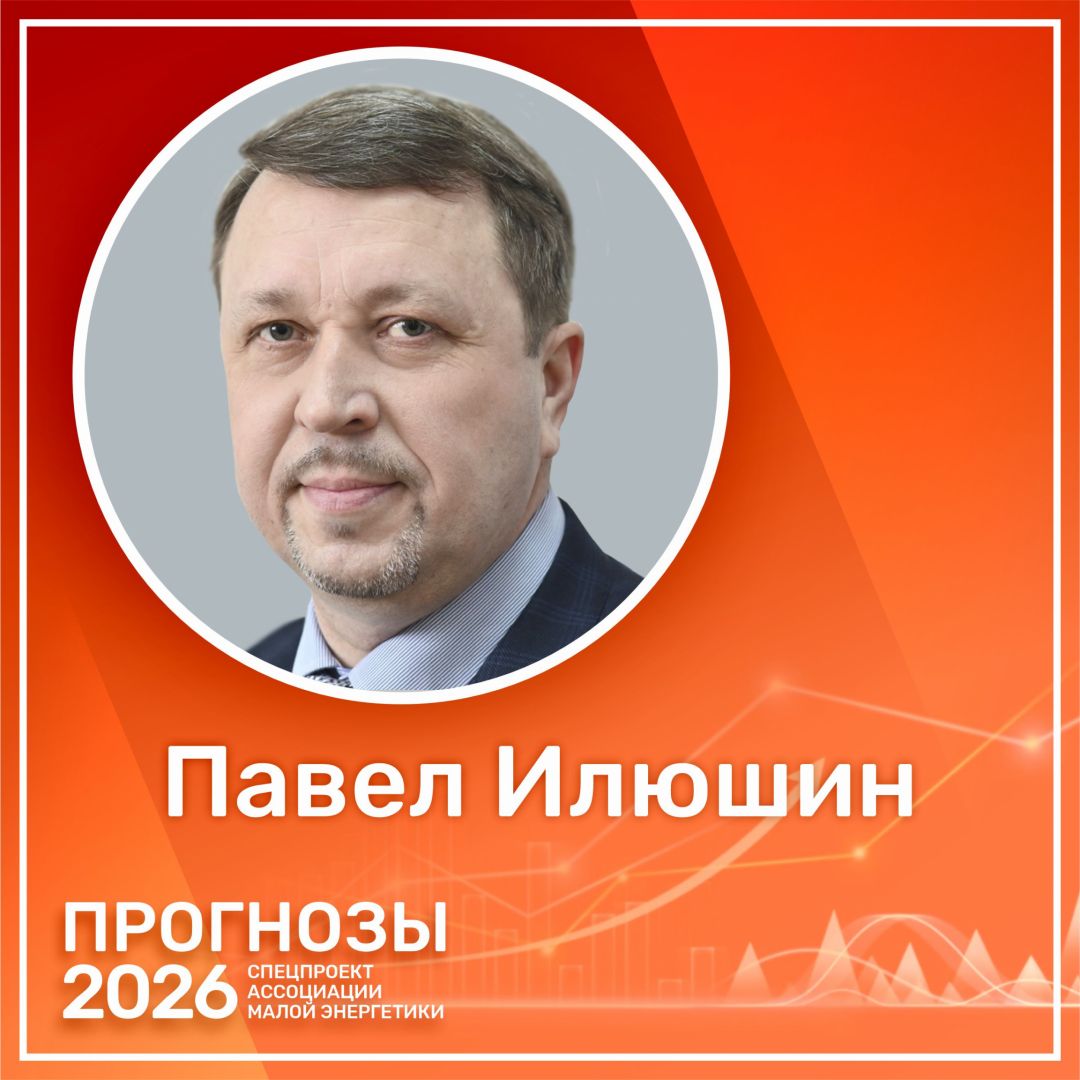
Pavel Ilyushin, Vice President for Science, Distributed Power Generation Association; Head of the Center for Intelligent Electric Power Systems and Distributed Energy, Institute of Energy Research, Russian Academy of Sciences; Doctor of Technical Sciences
What, in your opinion, awaits the distributed energy industry in Russia in 2026?
Given the continuing annual increase in tariffs for electricity and heat energy for legal entities, enterprises, and organizations, the distributed energy industry will continue to develop in 2026. It is difficult to predict the pace of this development, as it depends on a large number of factors. However, according to statistical data and expert assessments, the distributed energy sector has shown significant growth rates over the past few years. For many enterprises, especially those with energy-intensive production processes, this is not a matter of choice but a matter of survival and the possibility of continued existence.
Under the current operating conditions of regional power systems, flexibility and survivability are coming to the fore, rather than reliability, efficiency, and environmental friendliness. To increase flexibility, justified volumes of generating capacity at distributed energy facilities need to be introduced. Since distributed energy facilities are usually connected to medium-voltage distribution networks (6-10 kV), this can significantly increase their flexibility and survivability, as well as ensure reliable power supply to consumers in emergency and post-emergency modes. Currently, the quantity and total capacity of backup power sources in regional power systems are insufficient to supply electricity to a large number of consumers during widespread blackouts, while distributed energy facilities can effectively solve this problem.
To ensure reliable electricity and heat supply to consumers in non-standard situations, it is important to commission not individual distributed energy facilities, but local intelligent energy systems (LIES) based on them. LIES is a local power supply system with distributed energy facilities with a total capacity of up to 25 (50) MW, connected to networks up to 110 kV, operating under the control of a decentralized emergency and mode management system, ensuring a stable and safe transition from parallel operation to island mode and back. The automation system was developed in Russia on a domestic component base and can be implemented right now.
In the context of the growing power deficit in certain regions of the country, distributed energy could effectively address the issue of covering this deficit. It is known that the design, construction, and commissioning timelines for distributed energy facilities are within one year, and the specific capital costs are significantly lower (several times) than any type of large traditional power plants.
Reconstruction of heating gas boilers with their conversion into mini-CHP plants based on fully domestic generating and auxiliary equipment will help cover electricity capacity deficits in the country's regions. It is necessary to develop standard technical solutions for boiler house reconstruction, which would allow the formation of an industry-wide order for all types of equipment. This could become a national project in the electric power industry.
The large-scale development of artificial intelligence systems requires the construction and commissioning of new data centers, which consume significant amounts of electricity. Under conditions of power deficits in many regional power systems, connecting them is impossible. The introduction of distributed energy facilities, including mini-CHP plants during the reconstruction of heating gas boilers, will provide the necessary capacity for connecting new data centers.
What kind of support does the distributed energy industry need, and will it receive it in 2026?
The industry can develop without any special support, as it has done over many recent years. However, if the goals, role, and place of distributed energy in the national electric power industry are clearly defined, then the joint operation of traditional power plants and distributed energy facilities as part of regional power systems can provide significant local and system-wide effects.
For the normal functioning of distributed energy facilities, further development of the retail electricity and capacity market in Russia is required, which the expert community has long and frequently discussed, but real steps in this direction are minimal.
To cover existing power deficits in regional power systems, it is necessary to lift restrictions on the delivery of excess power from distributed energy facilities to the external grid. Furthermore, issues related to simplifying the process of technological connection for both distributed energy facilities and LIES to distribution networks need to be systematically addressed. The requirements for them should be different, which is fully justified by the peculiarities of their operation.
It is advisable to lift the ban on combining activities for generation, transmission, and sale of electricity within LIES with a capacity of up to 25 (50) MW, operating as part of the Russian Unified Energy System, to reduce operational costs and increase the efficiency of management decisions.
Legislation should mandate the inclusion of information on operating and planned distributed energy facilities in the Schemes and Programs for the Development of the Electric Power Industry of the Subjects of the Russian Federation, as well as in Heat Supply Schemes for settlements, municipal districts, urban districts, and cities of federal significance. This will optimize costs for the construction of grid facilities, enhance competition in retail electricity and capacity markets, and improve the accessibility and reliability of heat supply for consumers.
What main task in the field of distributed energy do you set for yourself in 2026?
To introduce your own micro-generation in a country plot, with the installation of roof-mounted photovoltaic modules and a hybrid energy storage system, without selling surplus electricity to the grid. All generated electricity will be consumed in the internal network through the implementation of non-standard technical solutions, while it will be possible to provide reliable power supply to own electrical receivers in the event of external power supply failure without installing a diesel generator.
On a more serious note, there are several tasks I plan to work on in 2026. I plan to conduct comprehensive surveys of heating gas boilers to assess their suitability for conversion into mini-CHP plants during reconstruction based on domestic (or from friendly countries) cogeneration units. The result will be the development of preliminary feasibility studies with key technical and investment decisions. I plan to consider boiler houses with different thermal loads, using microturbines, gas piston, and gas turbine units as generating sets.
LIES in remote, hard-to-reach territories can be grouped to ensure mutual redundancy. Such territorially integrated LIES will be united by a common mode with an intelligent decentralized emergency and mode management system. The main algorithms for such automation have already been developed and tested on mathematical and physical models, so it is planned to implement a pilot project where this development will prove its effectiveness.
The development and manufacture of solid-state transformers (SST) in Russia allows for addressing the issue of ensuring reliable power supply for residential consumers at a different level. The use of SST allows for compensation of voltage sags, fluctuations, and interruptions, regulation of voltage, current, frequency, and power factor, and reduction of higher harmonic levels through power electronic converters and capacitors in the DC link. Creating AC and DC microgrids based on SST and microgeneration in cottage settlements ensures high autonomy, dynamic stability, and comprehensive management of their modes under various circuit and operating conditions. This solution eliminates the need for expensive leading inverters to ensure reliable power supply to consumers in the island mode of an AC microgrid. Implementing a pilot project to create a hybrid microgrid in one of the cottage settlements based on SST and microgeneration will demonstrate real effects and allow for scaling this technical solution.
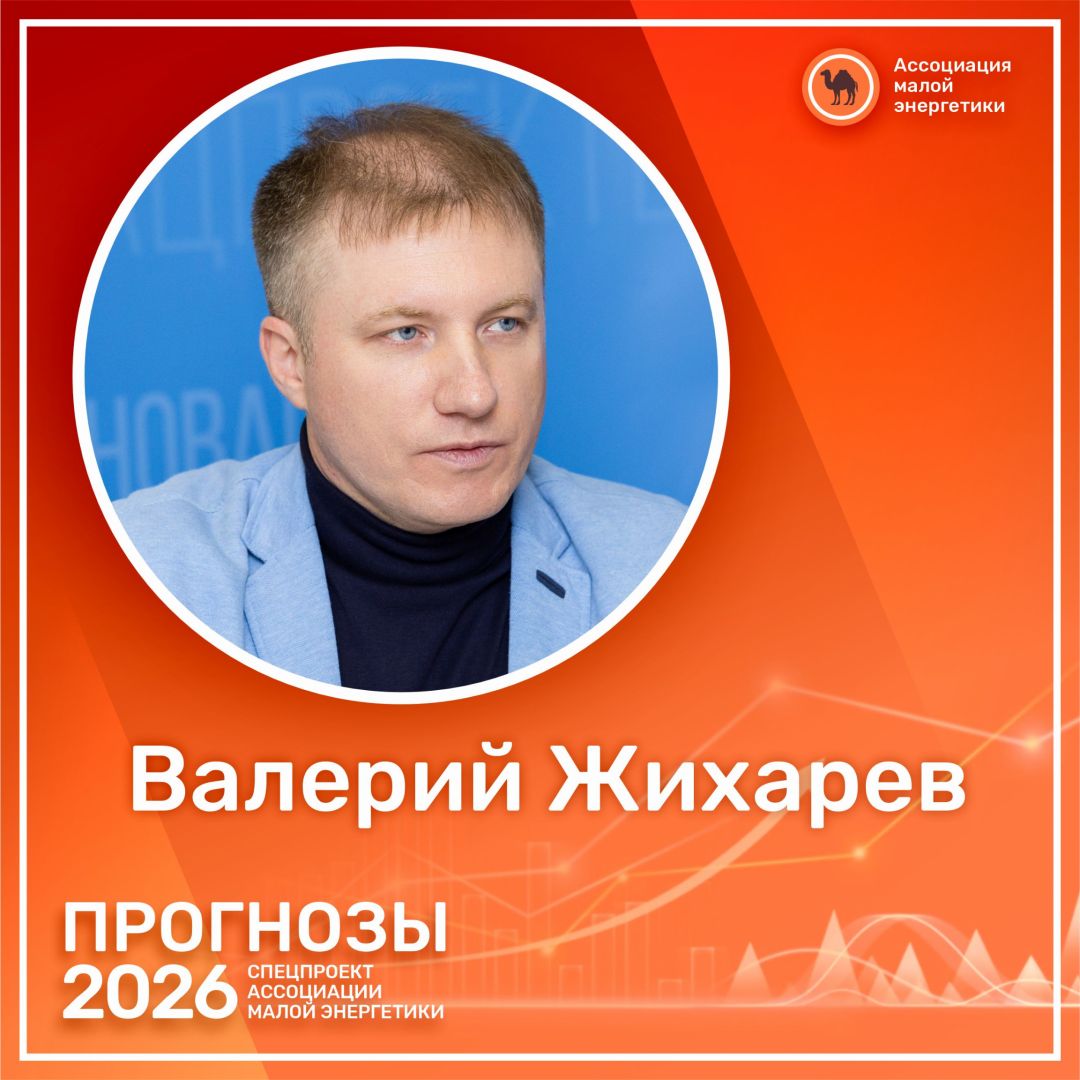
Valery Zhikharev, Vice President of the Distributed Power Generation Association, Candidate of Economic Sciences
What, in your opinion, awaits Russia's distributed energy industry in 2026?
In 2026, the distributed energy industry in Russia will continue moderate growth but will remain in a state of structural uncertainty due to the lack of a clear state policy in the field of distributed energy, necessary to ensure the reliability and quality of energy supply to the economy.
An increase in installed capacity of 2.1–2.3 GW is expected, mainly due to the development of own energy facilities by electricity consumers; construction of consumer generation to improve the quality and reliability of energy supply in areas with limited generation; modernization of diesel and gas-diesel generator units (DGU) in isolated energy districts (Far East, Arctic); pilot projects of hybrid microgrids with renewable elements (solar generation + diesel + energy storage); expansion of gasification and connection of new industrial consumers to thermal power plants (TPP).
Nevertheless, 2026 could be a turning point in regulatory terms — if approaches to distributed energy facilities regarding technological connection and electricity trading on retail electricity and capacity markets are revised.
What kind of support does the distributed energy industry need, and will it receive it in 2026?
The distributed energy industry urgently needs regulatory changes that will unlock its potential to reduce costs and improve the quality and reliability of energy supply to the economy. The proposals of the Distributed Power Generation Association to improve technological connection and develop distributed energy have been officially taken into account in the Action Plan for Achieving Key Performance Indicators for the Development of the National Model of Target Business Conditions until 2030, approved by Decree of the Government of the Russian Federation dated November 29, 2025, No. 3523-r.
Among the key initiatives of the Association are: introducing a mechanism for resolving problematic issues during technological connection; excluding excessive measures from technical conditions that increase connection costs; drastically reducing the time and cost of technological connection by changing procedures and requirements; determining the connection cost proportional to the volume of requested capacity when implementing measures for several applicants; expanding the application of the mechanism for redistributing maximum power, etc.
Furthermore, the Presidential Directive of the Russian Federation dated January 3, 2026, No. Pr-21 (following the meeting of the Council for Strategic Development and National Projects) took into account the revolutionary proposal of the Association to synchronize the technological connection to utility networks with the construction period of the connected facility (not exceeding it).
Currently under consideration are proposals for introducing a "reverse tariff" mechanism — the return of consumer investments in grid infrastructure construction through additional revenue of grid companies; including the construction of distributed energy facilities (including energy storage systems and participation in demand management) in the list of applicant's measures when forming technical conditions; accelerating the technological connection of generation facilities to 8–12 months (instead of two years), as well as eliminating the requirement to develop a power output scheme for generation over 5 MW operating in parallel mode without delivering power to the grid, and many others.
What main task in the field of distributed energy do you set for yourself in 2026?
The main task for 2026 is the commissioning of new efficient distributed energy facilities. In 2025, a number of significant projects in the field of distributed generation with a capacity from 17 to 25 MW were implemented at large energy-intensive enterprises. The particular value of these projects lies in their high economic efficiency: specific capital costs "turnkey" (including site preparation and construction of all utility networks) amounted to 95–105 thousand rubles/kW including VAT.
For comparison: this is more than 2 times lower than the maximum level of capital costs for the construction of large gas generation under the KOM NGO mechanism and 1.5–3 times lower than specific capital costs for the modernization of gas generation based on the results of KOMMOD. Considering the actual level of growth in 2025 (about 1.8–2.3 GW), the main task for 2026 is to commission at least 2.3 GW of distributed energy and reach a total volume of about 42 GW.
It is also important to begin implementing regulatory initiatives, which, together with the application of the most efficient technologies (including domestic ones), will significantly improve the availability of power supply for businesses and reduce connection and electricity consumption costs.
Anvar Ramazanov, Deputy General Director for Strategic Development, JSC "GT Energo"
What, in your opinion, awaits Russia's distributed energy industry in 2026?
In 2026, the development of distributed energy will continue. This is facilitated by growing energy consumption, the development of energy-intensive technologies (AI, data centers), grid wear, and high tariffs. However, the key factor determining growth rates will remain state regulation and the cost of borrowed capital. The adaptability and flexibility of these factors will determine the extent to which the industry can realize its potential to cover the growing power deficit.
What kind of support does the distributed energy industry need, and will it receive it in 2026?
The industry critically needs systemic measures: simplifying regulatory procedures, revising outdated tariff models, and improving macroeconomic conditions, primarily reducing the cost of borrowed funds. In 2026, we expect point improvements, especially in the field of tariff regulation, but for a full-fledged leap forward, bolder and more comprehensive solutions from the state are required.
What main task in the field of distributed energy do you set for yourself in 2026?
Our key internal task for 2026 is expanding our generation and improving the efficiency of our existing assets through the implementation of innovative solutions. We are focusing on digitalization, new technologies, management, and optimization systems to ensure maximum reliability and economic efficiency from our generation facilities.
Boris Martsinkevich — Editor-in-Chief of the independent analytical online publication "Geoenergetika INFO"
What, in your opinion, awaits Russia's distributed energy industry in 2026?
In 2026, significant changes in the implementation of the General Scheme for the Placement of Generation Facilities until 2042 should not be expected. It is possible that, given the decline in electricity consumption in 2025, the Ministry of Energy and the System Operator will be forced to revise construction volumes downward.
The Energy Strategy approved by the government in April 2025 still has not received a roadmap — ministries and departments will continue to be busy developing and approving new strategic documents, which, if they bring development closer, will only do so in the medium term.
Consequently, all consumers who need energy will receive real support only from companies capable of creating small generation facilities — demand for distributed generation will steadily grow.
What kind of support does the distributed energy industry need, and will it receive it in 2026?
The System Operator in its analysis has identified regions with the greatest demand for small distributed generation: these are regions where risks of energy deficit are forecasted to increase: the United Energy System (UES) of the South, UES of the Center, UES of the East, and the southern regions of the UES of Siberia.
In my opinion, the authorities of the federal subjects should be interested in solving this problem within reasonable timeframes, so the Distributed Power Generation Association (DPGA) should build constructive relationships with them. The System Operator, as the organization responsible for the mode load in the Russian UES, UES of the East, and in the United Power Systems of the East (UPS East), can also provide support.
The position of the Ministry of Energy and Rosseti is known, and there is no reason to expect it to change — assistance to distributed generation, if any, will be minimal. DPGA is making efforts to cooperate with federal authorities, but in my opinion, DPGA should work more closely with regional authorities.
Given the high heat loads in the UES of the East, UES of Siberia, and UPS East during the heating season, DPGA's proposals for combined generation of electricity and heat will receive greater support in these regions. Projects using various types of fuel — from natural gas and petroleum products to coal, wood pellets, wood chips, and other bioresources — will also generate interest.
The wider the proposed range, the higher the chances of expanding the circle of allies and helpers.
What main task in the field of distributed energy do you set for yourself in 2026?
The main task of the "Geoenergetika" project in the field of distributed generation is obvious: the widest possible coverage of the activities of companies operating in this sector across all internet resources at our disposal. We hope for the continuation and expansion of cooperation.
Ilyas Nazipov — Commercial Director of "GreenTech Energy"
What, in your opinion, awaits Russia's distributed energy industry in 2026?
Distributed generation in Russia is growing steadily: ~2.3 GW of capacity added in 2025, ~70% of new capacity came from gas installations. This indicates high demand for local energy sources due to the economic and technological advantages of gas piston power stations for industry and remote areas.
However, the actual growth turned out to be lower than forecasts (up to 5 GW) due to regulatory and infrastructure barriers. Worn-out grids, weak tariff incentives, difficulties with logistics of imported equipment, volatility in gas prices, and increased tax burden on SMEs reduce investment attractiveness and the predictability of project financing. This will hinder the industry in the future.
Project implementation will depend on improvements in the legal framework and infrastructure. Gas solutions will remain the core of the market, but renewables and hybrids are gradually increasing their share. Growth will continue, but without sharp jumps, mainly where there is economic benefit or government programs.
What kind of support does the distributed energy industry need, and will it receive it in 2026?
The key request from businesses is adapting market rules to the new reality, not to the model of large centralized generation. For many enterprises, especially in Siberia, the Arctic, and the Far East, distributed generation is a way to increase reliability and reduce costs.
But regulatory barriers and sanctions hinder project launches, increase costs and timelines, and Russian manufacturers cannot yet compensate for the shortage of imports, especially high-tech equipment.
The industry needs systemic support: tax incentives, reduction of connection barriers, access to preferential financing, and integration into market mechanisms, including compensation for excess generation. However, state policy remains focused on macroeconomic stability, making large-scale tax and financial incentives unlikely.
As for 2026, there are prerequisites for discussing industry initiatives at a high level. For example, the proposals of the Distributed Power Generation Association are enshrined in the level of presidential instructions, which indicates political interest in the industry. For instance, direct subsidies for small and medium agribusiness from 2026 have been publicly announced: the government will reimburse up to 60% of the costs of purchasing gas piston units.
However, the focus remains more on maintaining macro-stability than on expanding benefits for small businesses in energy. This is evidenced by the tightening of taxes. Therefore, large-scale tax and financial incentives are currently unlikely due to overall budget and economic policy.
Most likely, in 2026, support for the industry will proceed mainly in a regulatory format — discussing amendments, pilot integration mechanisms, public-private interaction on energy supply and infrastructure modernization projects.
What main task in the field of distributed energy do you set for yourself in 2026?
The market today needs not just a supplier, but a partner willing to take on part of the project, service, and operational risks, guaranteeing a predictable result.
Our task is to strengthen the position of "GreenTech Energy" as a reliable and technological partner in Russia's distributed energy sector by expanding local presence and supporting clients, as well as creating solutions that will sustain steady growth, high standards, and economic attractiveness.
Service and engineering expertise are our key competitive advantage, which we continue to develop. For us, it is important to: enhance our own engineering and service expertise; reduce dependence on external manufacturers in diagnostics and repair; create a service model where the project remains viable even when external conditions change.
As experience has shown: equipment can be replaced, but lost expertise — never.
Maria Stepanova, Director of Expert Bureau "EnergiaVita", host of the channel EnergoA++
What, in your opinion, awaits Russia's distributed energy industry in 2026?
Growth in industrial distributed generation (gas piston/gas turbine/diesel units, including backup) will continue, through which consumers address two key demands: reliability and cost control.
In terms of consumer types, industry and extraction, including remote sites, will lead; data centers and everything related to AI; regions with deficits or grid constraints (and there even LCOE is secondary).
If the threshold for microgeneration is raised, this will open a niche for renewables for small and medium businesses; we will see a "second wing" of Russian distributed energy.
The prospect of introducing take-or-pay and increased connection costs changes the feasibility studies for distributed generation: capital costs will be compensated not only by savings on tariffs but also on connection and capacity payments. The latter, conceived to protect investments in grids, may have an ambiguous effect. The consumer will choose either to utilize the paid-for capacity (which contradicts the basic logic of energy efficiency) or move faster into their own generation to avoid dependence on new rules, i.e., such a decision will encourage the departure of the most solvent clients.
We will see a new concept for the development of competitive retail markets — perhaps niches for demand management, aggregators, virtual power plants, load curtailment, and "energy as a service" contracts will open up in the future.
In the engineering + service bundle, under sanctions and new supply chains, the role of competencies in proper operation, repair, and adaptation of existing equipment to available service is growing; insurance of technological risks may also develop.
What kind of support does the distributed energy industry need, and will it receive it in 2026?
It would be good to view distributed generation not as bypassing the grid completely, but as a tool for reliability, grid relief, and electrification.
- Standardize connection and parallel operation of distributed facilities — standard technical conditions, unified admission/testing procedures, predictable timelines, and exhaustive grounds for refusal (balancing grid and consumer interests, lower transaction costs).
- Legalize and describe the microgrids regime as a useful element of the power system — establish permissible models (site/cluster/industrial park), boundaries of responsibility for quality and safety, requirements for protection/automation and telemetry, etc.
- Launch a fast track for projects with provable systemic benefits — accelerated approval and connection where it relieves deficit nodes, increases reliability of critical infrastructure, or "defers" grid capex; in surplus regions, prioritize projects that reduce peaks and losses.
- Reformat the punitive take-or-pay model into something like an availability payment with choice — give the consumer a legal way to reduce capacity payments through measurable flexibility (peak management, load/generation curtailment on command, backup, reactive power compensation, etc.).
- Create flexibility markets at the retail level and in deficit nodes — allow on-site generation and storage to participate in demand management so investors in distributed solutions earn from system services, not just tariff savings.
- Expand and simplify the microgeneration regime where it strengthens the system, with mandatory safety, metering, and grid feedback requirements. In deficit regions, it is an accelerator of local reliability; in surplus regions — a tool for peak reduction. At the same time, introduce obligations for data and manageability for distributed energy projects (telemetry, cyber and technical safety, protocol compatibility, capabilities for dispatch interaction, etc.) — so these projects work to enhance power system resilience.
- Associations can contribute to industry quality — certifying integrators, service standards, model contracts.
Will it receive support? — That is a question for the regulator, which, ideally, should balance the interests of all players and calibrate the market so that all players work towards a common optimal result.
What main task do you set for yourself in 2026?
As a certified energy management auditor with experience in implementation, consulting, and training, I see three priorities — data quality, process transparency, and working with people. They are relevant for all levels and contribute not only to economic effects but also to reliability and resilience in the face of rapid changes, risks, and emergencies. I will focus on this in my work.
Alexey Kremer — General Director of the ENELT Group
What, in your opinion, awaits Russia's distributed energy industry in 2026?
Currently, Russia has developments and implemented projects in the field of distributed generation, energy storage systems, management systems, and other industry segments. Thus, since 2016, the ENELT Group has implemented 12 projects for the construction of autonomous hybrid power plants in the Republic of Sakha (Yakutia), Kamchatka Krai, and Irkutsk Oblast, and has developed and patented an automated process control system for electricity generation — the ENELT AHPS Automated Control System.
The need for energy supply to isolated territories of the country, the high percentage of wear and tear of the energy system built during the USSR era, the need to improve the energy efficiency of the current energy supply system, and the transition of consumers to decentralized energy supply — all these factors determine the development of the distributed energy industry.
The current economic situation in the Russian Federation, characterized by powerful sanctions pressure from unfriendly states and tight internal macro-financial policy, has certainly had a negative impact on the activities of industry companies. Difficulties have arisen in obtaining and the cost of imported components, increased cost of credit funds, and difficulties in attracting investments for implementing AHPS construction projects.
I hope for improved conditions for implementing the company's projects, for the successful execution of cooperation agreements in the field of energy supply signed in 2025 with companies and regional governments of the Russian Federation. A reduction in the Central Bank's key rate will enable the implementation of the company's projects: commissioning of 5 facilities in the Republic of Sakha (Yakutia) and Kamchatka Krai, and launching a printed circuit board production workshop.
What kind of support does the distributed energy industry need, and will it receive it in 2026?
Addressing the task of energy supply to the population of remote, energy-isolated territories of the Russian Federation through the implementation of autonomous hybrid power plant construction projects in 2026 will require creating new conditions and developing different mechanisms for implementing projects of such complexity. Implementing projects based solely on the investment potential of small businesses is impossible under the current economic situation in the country.
There is a need for large-scale projects with state support, in which companies specializing in the design, production, and construction of AHPS, production and supply of solar power plant equipment, renewable energy sources, diesel generator units, uninterruptible power supplies, thermal generation, and others could participate. Such projects will contribute to accelerating the modernization of the Russian energy supply system, ensuring access of the population in energy-isolated regions to uninterrupted, guaranteed energy supply 24/7, as well as increasing system energy efficiency and optimizing energy consumption management.
Projects involving the simultaneous reconstruction of heat and electricity generation facilities require further development of the legislative framework.
What main task in the field of distributed energy do you set for yourself in 2026?
In 2026, the ENELT Group plans to complete the implementation of three AHPS construction projects in the Republic of Sakha (Yakutia) in partnership with PJSC "RusHydro".
Additionally, we plan to launch serial production of automated hybrid power complexes (AHPS) of increased factory readiness based on renewable energy sources, diesel generation, and energy storage systems at a production site in Yakutia. A cooperation agreement for serial production of energy centers was signed with PJSC "RusHydro" at the Eastern Economic Forum 2025. An experimental prototype of the AHPS has been created as part of the project implementation.
We hope that launching serial production of ENELT AHPS will contribute to accelerating the process of providing electricity to settlements in the Russian Federation.
Valery Presnyakov, Editor-in-Chief of the newspaper "Energy and Industry of Russia"
What, in your opinion, awaits Russia's distributed energy industry in 2026?
There will be no breakthroughs. No increase in the number of projects either. What was designed or planned in the previous 2-3 years will be implemented. Everyone will plan new things with maximum caution. But there will be their own bureaucratic dances around such plans, especially if we are talking about large companies. In them, even if something is obvious to a specialist, it is not at all obvious to the financial service or the chief accountant. This is a time when everyone is hedging their bets as much as possible. Like, let's do this only when (you can substitute anything here: "sanctions start being lifted," "the special military operation ends," "the key rate drops," and so on).
What kind of support does the distributed energy industry need, and will it receive it in 2026?
Personally, I am impressed by the idea of developing and supporting new business models and forms of public-private partnership to attract technology businesses to solve the state task of socio-economic development of remote and isolated territories of the Far East and the Arctic. And then scale this experience to the whole country. At least there is a systematic approach here! Will the industry receive support from state agencies or not? In words — it will. In money — not very confident.
What main task in the field of distributed energy do you set for yourself in 2026?
Since I am answering as the editor-in-chief of one of the leading industry media in the country — the newspaper "Energy and Industry of Russia" — I will answer for us. We will continue to support market participants informationally. We are not averse to positive news from industry enterprises, always ready to report details of interesting distributed generation projects. It is no coincidence that when we hold roundtables on this topic, we try to invite both designers and those who have already implemented their own generation projects to share their experience. We invite representatives of regional authorities. And often, "inter-species" cooperation at such events is born right before our eyes. This also works excellently for the Distributed Power Generation Association, which is why I review (as a jury member) with such pleasure all the projects participating in the competition "Small Energy — Big Achievements."
Sergey Alekseenko, Full Member of the Russian Academy of Sciences (RAS), Scientific Director of the Institute of Thermophysics, Siberian Branch of the RAS, Laureate of the "Global Energy" Prize, Professor, Doctor of Physical and Mathematical Sciences
What, in your opinion, awaits Russia's distributed energy industry in 2026?
I think significant changes compared to the previous year are unlikely. However, the Small Energy Association and the competition it conducts should make a significant contribution to the further development of distributed energy (there is no doubt about such a necessity).
What kind of support does the distributed energy industry need, and will it receive it in 2026?
Obviously, state support is needed for the implementation of distributed generation technologies, which are extremely diverse, and therefore many of them have not been brought to a state of competitiveness with other common approaches. It is difficult to hope for such support this year due to the presence of other, more pressing problems.
What main task in the field of distributed energy do you set for yourself in 2026?
Among the most promising types of renewable energy sources, which belong to distributed energy, geothermal energy stands out. One can even argue that petrothermal energy (deep Earth heat) is sufficient to provide humanity with energy forever. Binary cycles hold a leading position worldwide in terms of growth rates among energy technologies, both in geothermal energy and in a number of other industries. But today, there are no binary geothermal power plants in Russia. And one of the main tasks for the near future is the development of domestic binary technologies based on the Organic Rankine Cycle using ozone-safe working fluids that do not possess a greenhouse effect. In 2026, the main results are planned to be obtained within the framework of the 2030 Program and the project of the Ministry of Science and Higher Education to create a Competence Center for Geothermal Energy in Kamchatka. Executors: Institute of Thermophysics SB RAS, Kamchatka State University (KamSU), Tomsk Polytechnic University (TPU), JSC "Zarubezhneft", Grozny State Oil Technical University named after M.D. Millionshchikov, CJSC "Turbocon".
Geothermal heat (including ground heat) is widely used in heat supply systems, both directly and with the help of heat pumps, which can be classified as basic equipment for distributed energy. In 2021, about 10% of the world's space heating needs were met by heat pumps. The forecast for 2030 is 18%. Tasks for the Russian Federation: large-scale application of heat pump and refrigeration technology (more broadly — thermotransformers) for the purposes of geothermal heating, air conditioning, and energy savings. Initiators: "Russian Center for Business Negotiations" (Krasnoyarsk), Institute of Thermophysics SB RAS.
Valentin Granin, General Director of the company "GEOTERMO", winner of the XI International Award "Small Energy – Big Achievements"
What, in your opinion, awaits Russia's distributed energy industry in 2026?
We can only judge based on our specialization — geothermal heat pumps. In 2026, we expect strong growth. This is due to the technology becoming more well-known and the emergence of large, operational facilities. The technology is becoming proven in practice, and many completed projects can be showcased. We have put considerable effort into this and continue to promote geothermal technology.
What kind of support does the distributed energy industry need, and will it receive it in 2026?
It would be great if enterprises using renewable energy sources received various forms of support, such as preferential loans or preferential electricity tariffs. And for us as a company trying to promote and popularize these technologies, to be given more opportunities to speak at various conferences, forums, and other PR opportunities.
What main task in the field of distributed energy do you set for yourself in 2026?
The main tasks of the company for 2026: launch "green energy" installations with a total capacity of 3 MW, open branches of "Geotermo" in St. Petersburg and Kazan. And active PR promotion of geothermal energy technologies "to the masses."
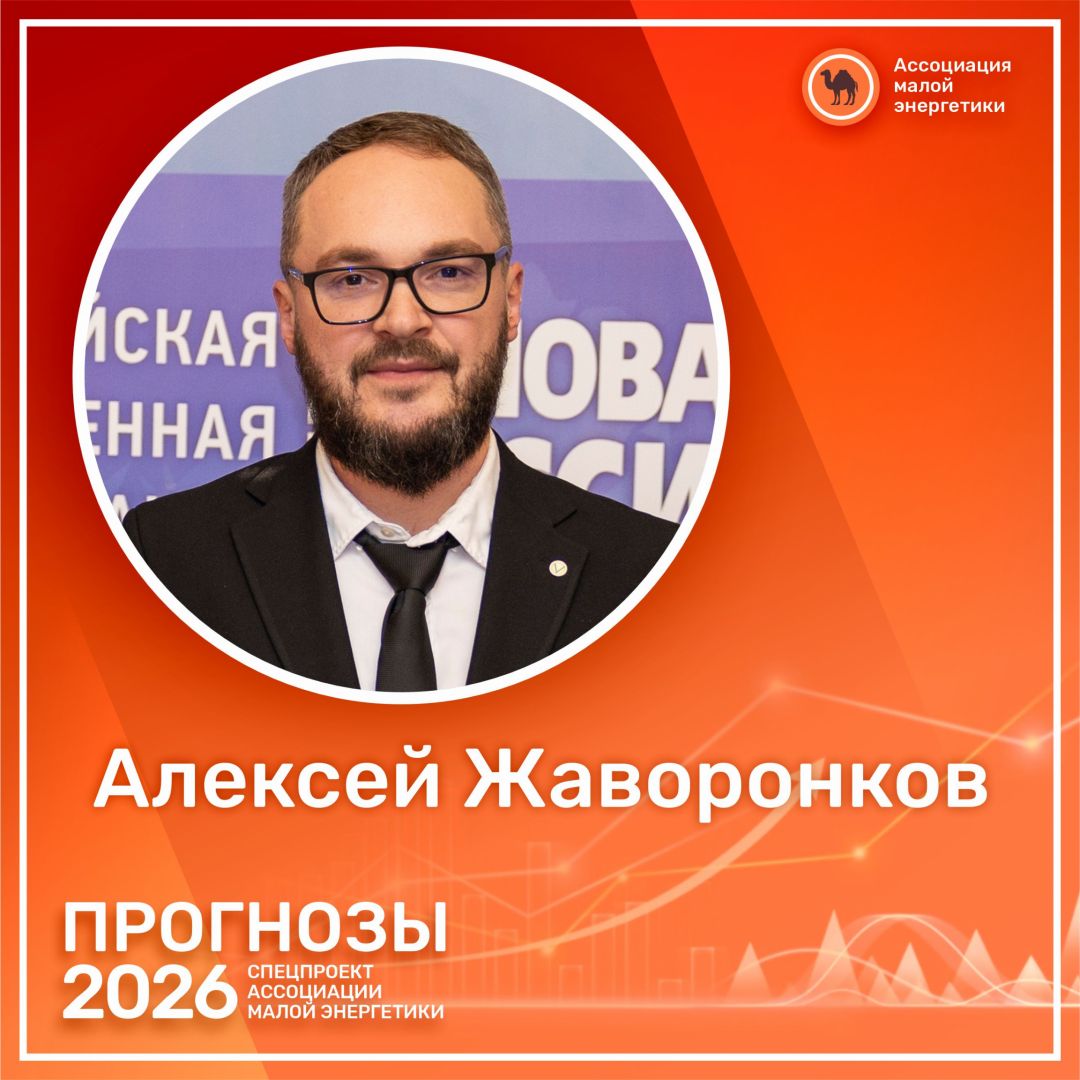
Alexey Zhavoronkov, General Director of Inter Terra LLC
What, in your opinion, awaits Russia's distributed energy industry in 2026?
One thing is certain — there will be fewer projects. Not only in our industry, but in general. Nevertheless, quality suppliers of goods and services will not see their portfolios shrink; it's simply that small companies and opportunists will exit the business.
What kind of support does the distributed energy industry need, and will it receive it in 2026?
Regulation and clear rules of the game for Chinese manufacturers on the Russian market are necessary. Right now, it's chaos. Everyone and anyone is selling, dumping prices, and "peddling" junk. As a result, not only the customer suffers, but also the conscientious supplier who didn't get their "piece of the pie" due to their supposedly high price.
What main task in the field of distributed energy do you set for yourself in 2026?
To earn a lot of honest money, so that all projects are launched, and both the client and we are satisfied.
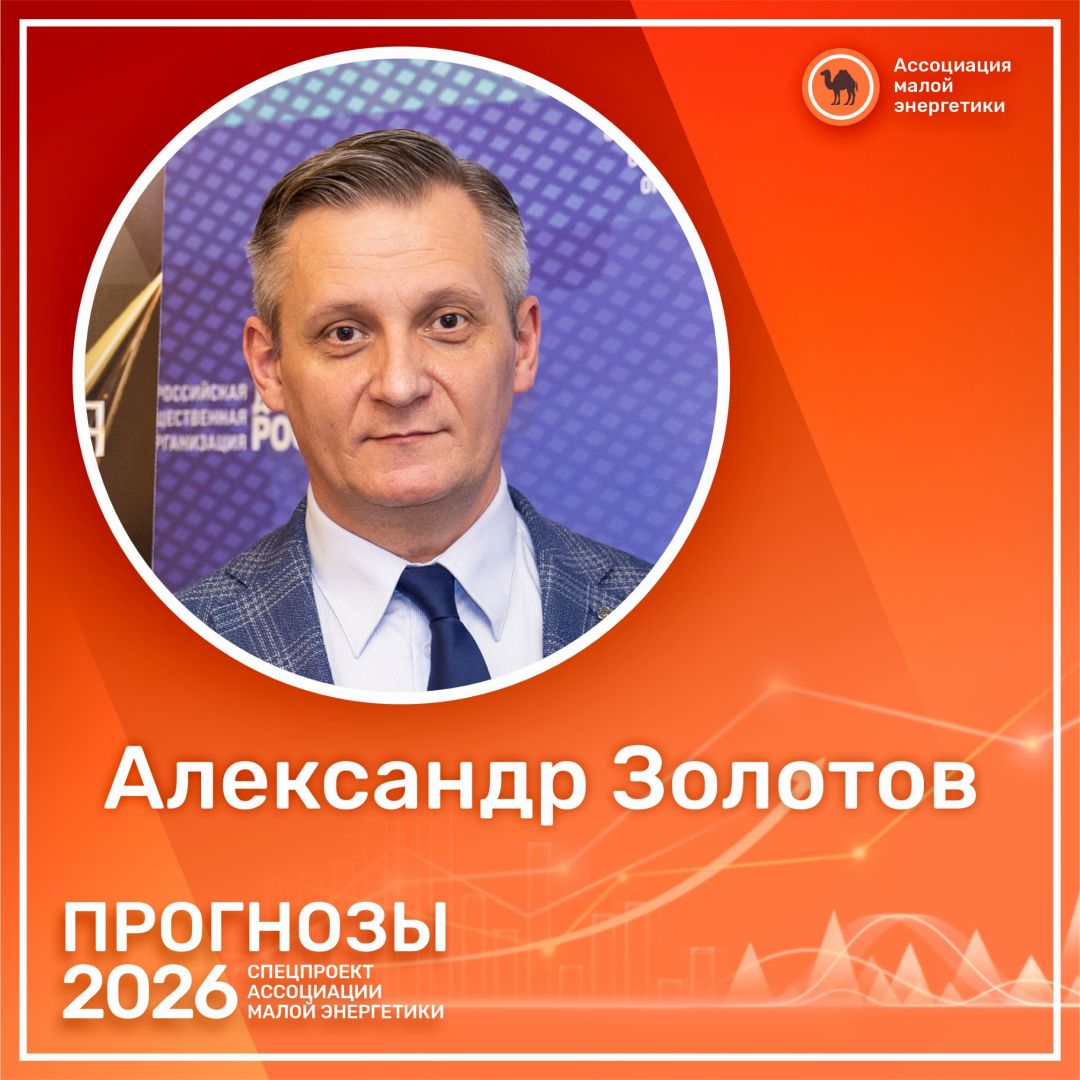
Alexander Zolotov, General Director of Khatrako LLC
What, in your opinion, awaits the distributed energy industry in Russia in 2026?
In 2026, the distributed energy industry in Russia will be in a phase of accelerated development driven by both internal and external factors. The main development trends are:
1. Growing demand for decentralized solutions.
Given the difficulty of connecting remote settlements and industrial facilities to centralized grids, distributed generation (including GPU, DGU, gas turbine mini-CHPs, and RES) is becoming economically and logistically advantageous. Solutions for the Arctic zone, the Far East, and other isolated regions are in particularly high demand.2. State support.
Implementation of support programs for small-scale energy will continue, including:
- Subsidies for equipment purchase.
- Development of the regulatory framework for microgeneration and autonomous energy systems.
- Development of import substitution in the equipment segment for distributed generation.3. Hybridization and digitalization.
- Implementation of hybrid systems: combining GPU, SPP, WPP, and energy storage systems (ESS).
- Growing interest in intelligent Energy Management Systems (EMS), including AI solutions for load forecasting, operational optimization, and cost reduction — especially in the industrial sector.4. Transition to gas and hydrogen technologies.
- Active use of natural gas (including associated petroleum gas) as fuel for gas piston power plants and dual-fuel systems.
- Initial steps in adapting equipment for low-carbon fuels (e.g., methane-hydrogen mixtures).5. Challenges.
- Restrictions on access to advanced technologies and components due to sanctions.
- The need to modernize outdated infrastructure.
- Financial barriers for small and medium-sized businesses when implementing new solutions.Conclusion:
2026 will be an important stage in consolidating distributed energy as a key element of Russia's energy security. Investment growth is expected, especially in the industrial and remote sectors, as well as a strengthening role for domestic technologies and digital platforms. This creates opportunities for both equipment manufacturers (including generator sets, storage, and control systems) and energy solution integrators.
What kind of support does the distributed energy industry need, and will it receive it in 2026?
The distributed energy industry in Russia needs comprehensive support covering regulatory and legal frameworks, financial mechanisms, technological development, and infrastructure integration. Key support areas and an assessment of their implementation in 2026:
1. Regulatory and legal framework.
- Clear definition of the status of microgeneration, microgrids, and autonomous consumers.
- Simplified procedures for connecting to grids and selling surplus energy.
- Regulation of "island" operation mode and two-way interaction with the grid.Expectations for 2026: Partial implementation. The Ministry of Energy and the FAS continue to work on rules for microgrid operation. Between 2026–2030, pilot zones (e.g., in the Arctic or Far Eastern Federal District) with simplified regulation are possible. However, an all-Russian regulatory framework for microgeneration remains fragmented.
2. Financial and investment support.
- Subsidies or concessional loans for purchasing equipment (GPU, ESS, RES).
- Partial capital cost compensation for industrial and municipal projects.
- Mechanisms for guaranteed purchase of surplus electricity.Expectations for 2026: Limited support. The state will focus on strategically important facilities (defense, housing and communal services in remote regions, mineral extraction). Programs like "green" tariffs are unlikely, but possibilities include: subsidies through the Far East Development Fund; support for import substitution projects in power machinery manufacturing; concessional financing through VEB or Rosselkhozbank for industrial microgrids.
3. Technological independence and localization.
- Development of domestic production of control systems, ESS, converters, GPUs, GTUs, and other distributed generation sources.
- Support for R&D in AI optimization, digital twins, and hybrid systems.Expectations for 2026: Active support. Under sanctions, the state will stimulate localization. Expectations include: grants and tax incentives for companies developing EMS platforms (like FORTRUST EMS); expansion of import substitution programs within the "Digital Economy" national project and the power machinery complex strategy.
4. Integration with the centralized grid.
- Technical standards for connecting microgrids.
- Motivating grid companies to cooperate (rather than block).Expectations for 2026: Weak support. Grid monopolies (FGC/IDGC) continue to resist decentralization. Without direct administrative pressure from the regulator, significant changes will not occur. However, in isolated power districts (IES), this problem is less acute.
5. Demand support: tariff policy and market.
- Flexible tariffs stimulating the use of ESS and demand management.
- Opportunity for microgenerators to participate in the balancing market.Expectations for 2026: Experiments, but not at scale. Certain regions may launch dynamic pricing pilots, but there will be no widespread implementation. The balancing market will remain closed to small players.
Conclusion: Will the industry receive support in 2026?
Yes — but selectively and primarily in the interests of the state. Support will be focused on: isolated and strategic territories (Arctic, Far East, defense); industrial consumers reducing grid load and increasing energy independence; domestic technologies, especially in management, automation, and localized equipment. Full-fledged "market" incentives (as in the EU or USA) are not expected. However, for companies operating in the B2B segment with a focus on reliability, autonomy, and digitalization (including AI and hybrid microgrids), 2026 could be a growth point due to state orders and corporate demand.
What main task in the field of distributed energy do you set for yourself in 2026?
The main task in 2026 will be developing technological sovereignty, and developing and applying modern technologies in the field of distributed generation. Developers and suppliers who solve this problem will become key players in Russia's new energy ecosystem.
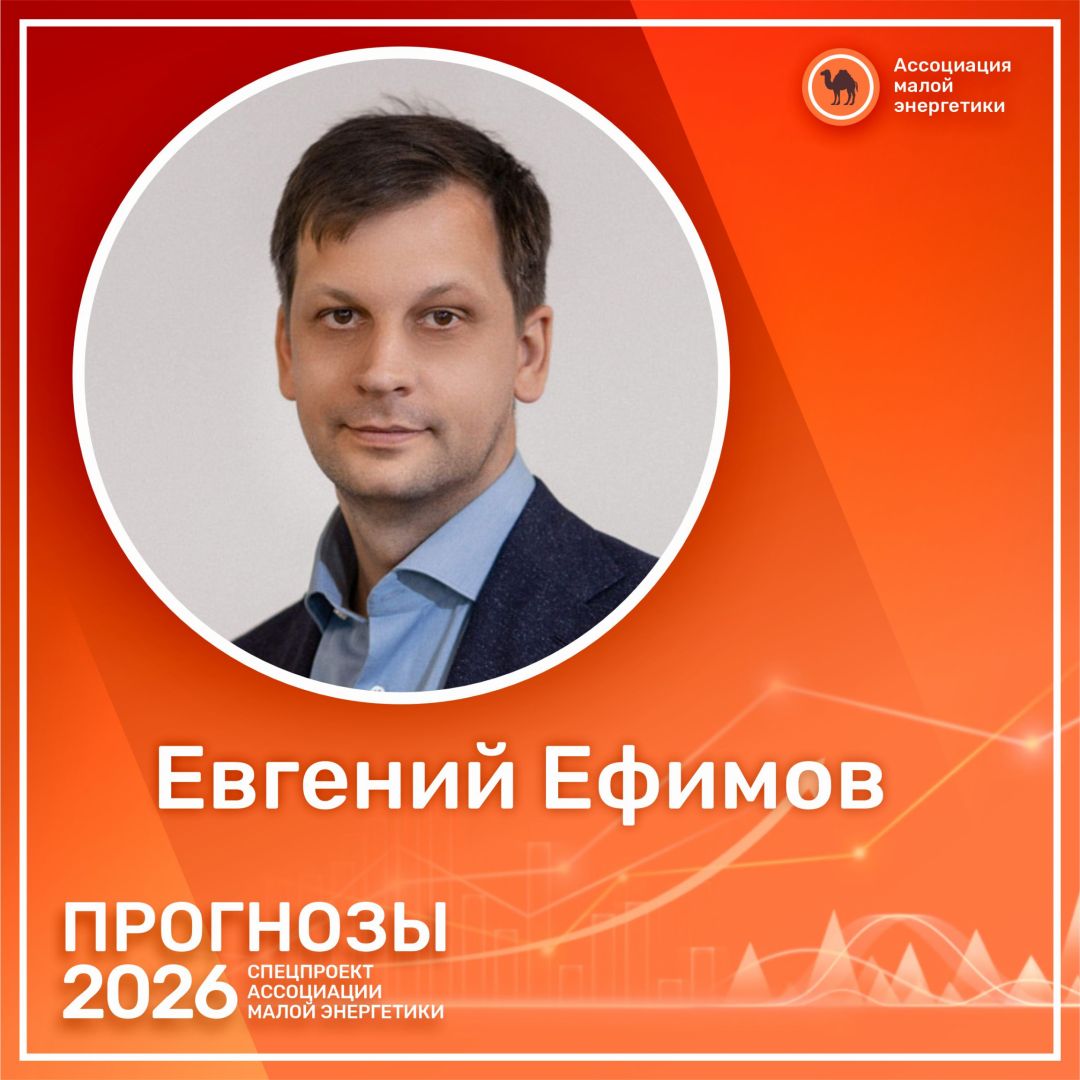
Evgeny Efimov, General Director of Rodvig Company
What, in your opinion, awaits Russia's distributed energy industry in 2026?
In 2026, distributed energy in Russia will develop noticeably more actively and will firmly establish itself as a working tool for industry and infrastructure. More and more companies are relying on their own generation not as a backup option, but as a conscious part of their energy strategy.
The key driver will be growing demand from industrial consumers. Rising electricity tariffs make self-generation economically more advantageous, and the desire for stable and reliable energy supply is especially important for regions with overloaded or underdeveloped grids.
Against this backdrop, the share of gas piston units in distributed generation will continue to grow. GPUs remain one of the most sought-after solutions for enterprises, remote facilities, and industrial sites. They allow for reducing electricity costs, providing backup power during grid outages, and selling surplus electricity if necessary.
Gas piston units are particularly actively used in oil and gas industry projects, social facilities, and thermal power engineering. In regions and industries where centralized energy supply is economically unprofitable or insufficiently reliable, their role will only strengthen.
Overall, by 2026, distributed energy is ceasing to be a niche direction. It is becoming a practical solution for improving the resilience, reliability, and controllability of energy supply for businesses and infrastructure.
What kind of support does the distributed energy industry need, and will it receive it in 2026?
Distributed energy today needs, first and foremost, the creation of an accessible and clear regulatory system. It is important for businesses to understand in advance the rules for project implementation, connection conditions, accounting procedures for generation, and mechanisms for dealing with electricity surpluses. Without this, even economically justified decisions are often delayed or implemented with significant costs.
A separate area of support should be the transformation of the procurement system. Practice shows that working technological solutions already exist in the industry and are successfully applied at individual facilities. However, these tools are rarely scaled. Changing procurement approaches would allow replicating proven solutions and implementing them faster in similar projects, especially in industry and infrastructure.
An important development factor remains the priority for products with Russian development. In combination with package service maintenance, this increases operational reliability, reduces dependence on external supplies, and ensures stable generation throughout the entire equipment lifecycle.
Tariff and administrative policy issues are no less significant. Rising electricity costs are already stimulating interest in self-generation, but complex approval procedures and disparate regional requirements continue to restrain the market. Simplifying these processes could become one of the most effective forms of support.
Speaking about 2026, large-scale programs of direct industry stimulation probably should not be expected. Nevertheless, targeted regulatory changes, the development of pilot projects, and adjustments to the regulatory framework considering accumulated experience are possible. Collectively, such measures can create more stable conditions for the development of distributed energy and the expansion of its role in power supply to industry and regions.
What main task in the field of distributed energy do you set for yourself in 2026?
In 2026, our main task is to make distributed energy a clear and truly working tool for business. Not in theory and presentations, but at specific facilities where stability, cost predictability, and the absence of downtime are important.
In practice, this means it's not just about equipment supply. Businesses need to get a ready-made solution that can be calculated, implemented, and operated without constant surprises. For example, when an enterprise understands in advance how much electricity will cost in a year or three, how quickly the system will pay off, and what to do in case of an emergency.
The first direction is making solutions accessible for real customers. 1.5 MW installations are often perceived as a complex and expensive project, although in reality, for many industrial sites, this is a perfectly workable and justified format. Our task is to show with concrete examples how such generation meets the facility's needs, reduces dependence on the grid, and helps withstand peak loads without stopping production.
The second direction is support focused on the client's result. We proceed from the premise that the customer cares not about the equipment itself, but about the stable operation of the facility. Therefore, support begins with feasibility studies and continues after commissioning. For instance, when the service model and maintenance costs are clear in advance, the enterprise can plan its budget and not fear unexpected expenses during operation.
The third direction is adapting solutions to real operating conditions. Universal schemes rarely account for the specifics of a particular production process, the region's climate, or consumption patterns. Therefore, it's important to refine the installation and control system to the customer's tasks. This could be a facility with uneven load, a remote site, or an enterprise with increased requirements for redundancy. In such cases, individual configuration yields the greatest effect.
Ultimately, our goal is to be a partner that helps businesses not just talk about self-generation, but achieve measurable results already during operation. This means increasing energy supply reliability, greater cost control, and reducing operational risks in the long term.
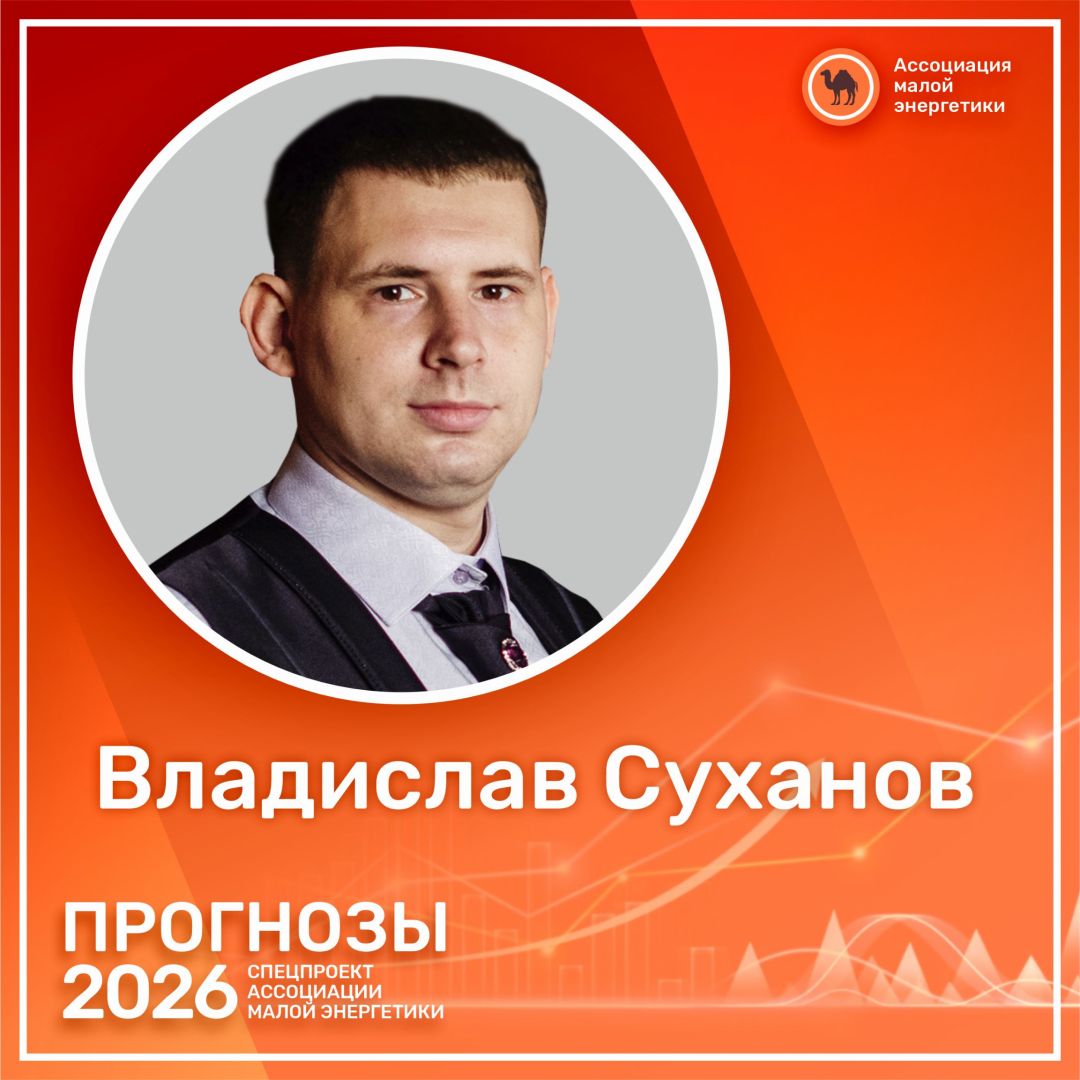
Vladislav Sukhanov, Commercial Director of Solartek LLC
What awaits Russia's distributed energy industry in 2026?
In our estimation, 2026 will be a year of growth for distributed energy. Gas generation will continue to be the growth driver, but we expect an increase in the share of renewable energy sources (RES) in distributed generation. Today, businesses already perceive the use of renewable sources as a tool to enhance sustainability by reducing the risk of production stoppages, cutting electricity costs, and partially covering capacity deficits in remote and energy-deficient territories (the Far East, the South of the European part of Russia, the Arctic).
What kind of support does the industry need, and will it receive it in 2026?
The main barriers can be grouped into three categories:
- Regulatory and administrative barriers (including specifics of technological connection and interaction with grids, restrictions on power output to the grid).
- Lack of additional financial incentives (absence of targeted support for RES projects, lack of tax benefits and direct budgetary incentives for distributed generation projects).
- Infrastructural and technological limitations (including the need to modernize grid infrastructure).
At the same time, we remain optimistic and believe that the industry will receive support in 2026 – if not in terms of financing, then in the form of simplifying and standardizing the rules. An additional stimulus could be the development and deployment of a state program to support microgeneration, which could benefit both domestic manufacturers of energy equipment and end consumers.
What main task in the field of distributed energy do you set for yourself in 2026?
Our main task for 2026 is to expand our project portfolio and generate stable demand for the energy-efficient solutions offered by our company, including our own manufactured solar modules. We focus on creating complete solar power plant kits, selecting optimal "turnkey" solar solutions tailored to customer requirements, and improving the operational characteristics of the power plants we offer. Thus, we aim to make distributed energy solutions even more reliable and accessible for clients.